I had some surveyors out to stake out the east boundary of the property.
Getting Schooled
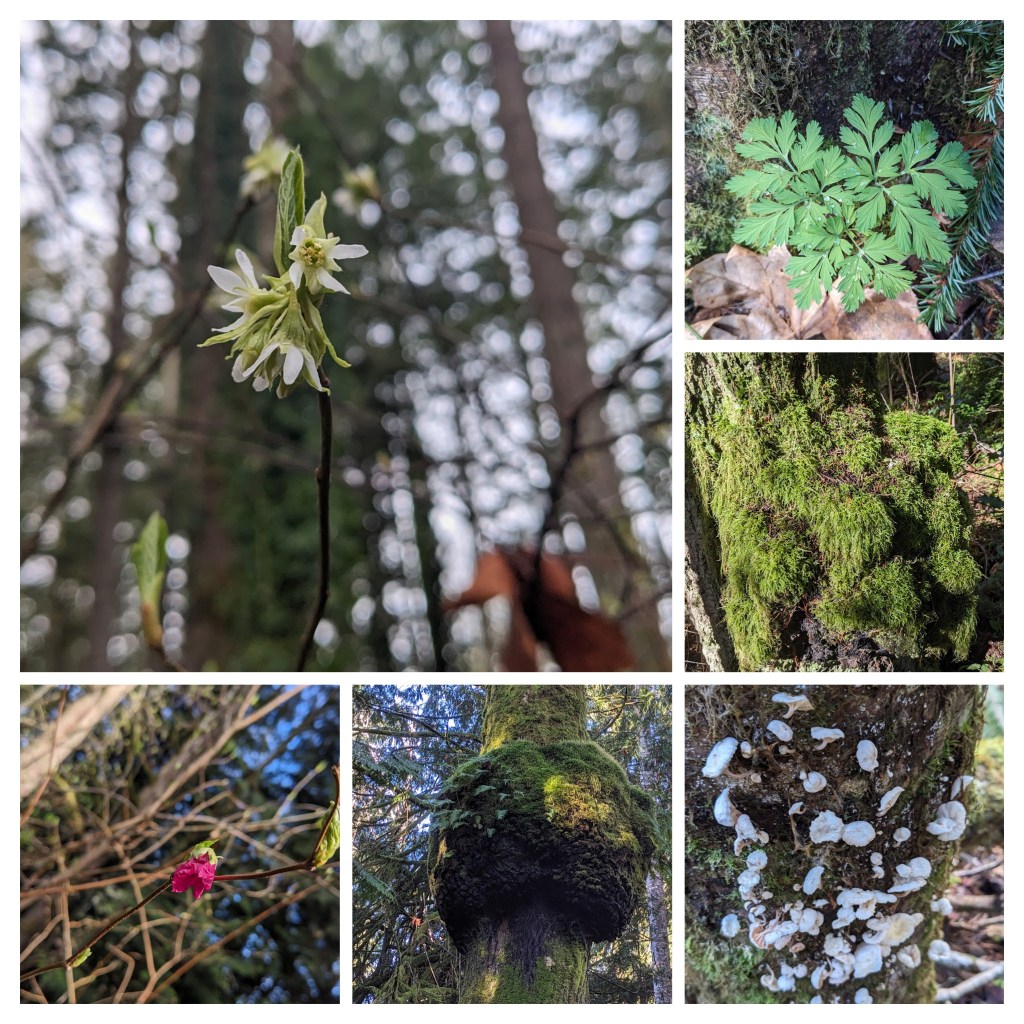
Early on, a forester friend help me identify the most predominant trees and shrubs on the land, of which the holly, ivy, and scotch broom are well known nuisances. Removing these, along with creating trails and establishing boundaries has kept and will continue to keep me busy for at least a few more weeks.
Realizing that I’m at the very beginning of journey of understanding how to care for the land, I’ve sought out resources geared towards forest owners in the area. There turns out to be a wealth of them.
WSU has an entire extension program dedicated to it. They’re currently 3 of 9 weeks into a forestry class for property owners being held on nearby Vashon island. I reached out to the lead instructor and got late admittance to that, then binged the online versions of the first three sessions he gave me to get caught up. I’m signed up for a day of sessions at a one day Winter School event next weekend, and subscribed to and catching up on their Forest Overstory Podcast, A podcast for small forest landowners.
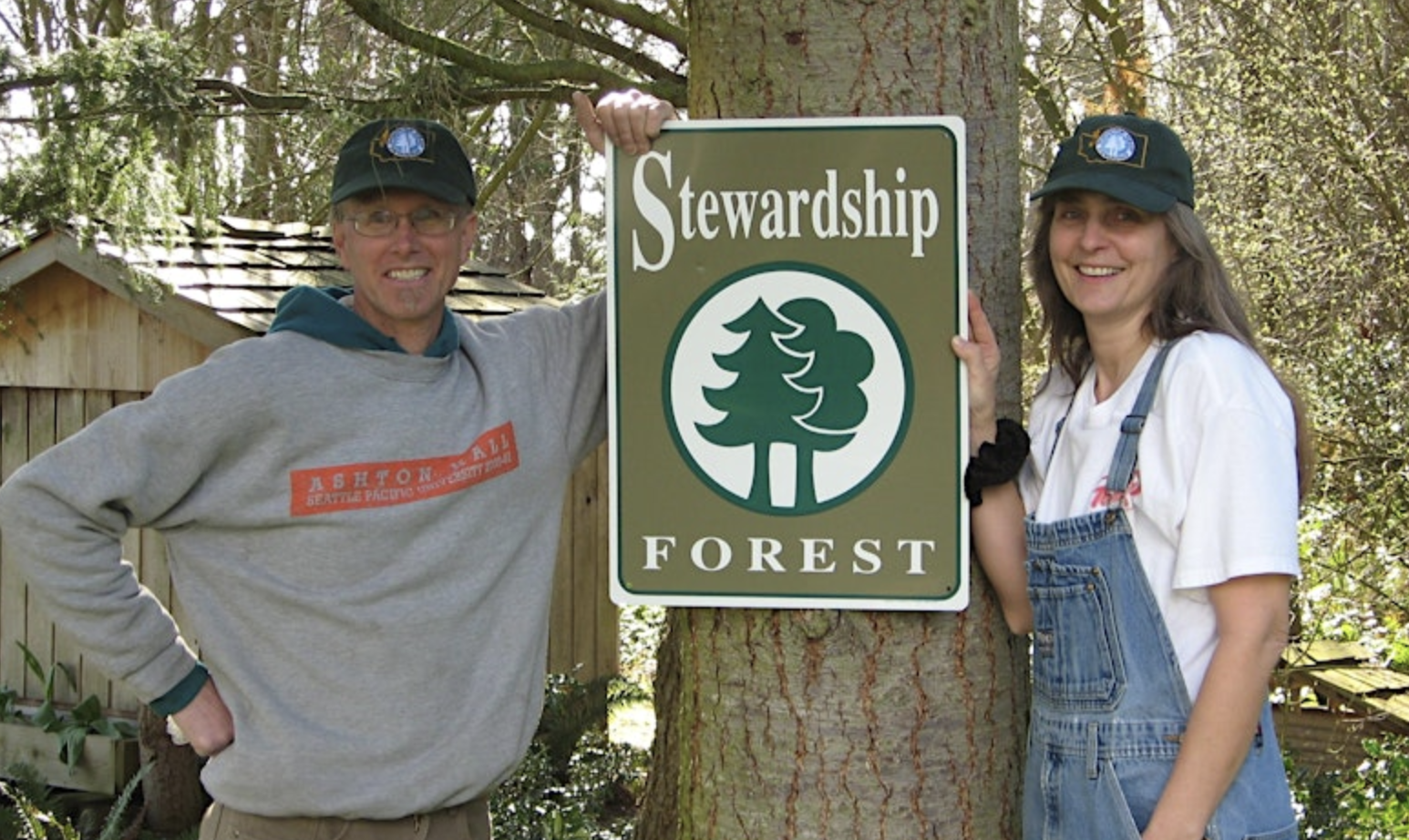
Kitsap county offers its own Forest Stewardship Program. Watching some of the presentations within that helped me connect the dots of my neighbor’s account that it’s been years since he’s seen the salmon that used to come up a creek we now share. According to this section on climate change, it was likely a drought in 2019 that prevented the salmon from getting upstream, followed by a deluge that washed away the eggs, along with the generational recollection of the spawning grounds.
Washington state’s Department of Natural Resources has a Landowner Assistance Portal, that I’ve only just begun to scratch the surface of.
Winter Weeding
Spring’s Coming
I checked out a weed wrench from the Cap Hill Tool Library, and have been using it on the holly as I grow the network of trails.
Power Tools
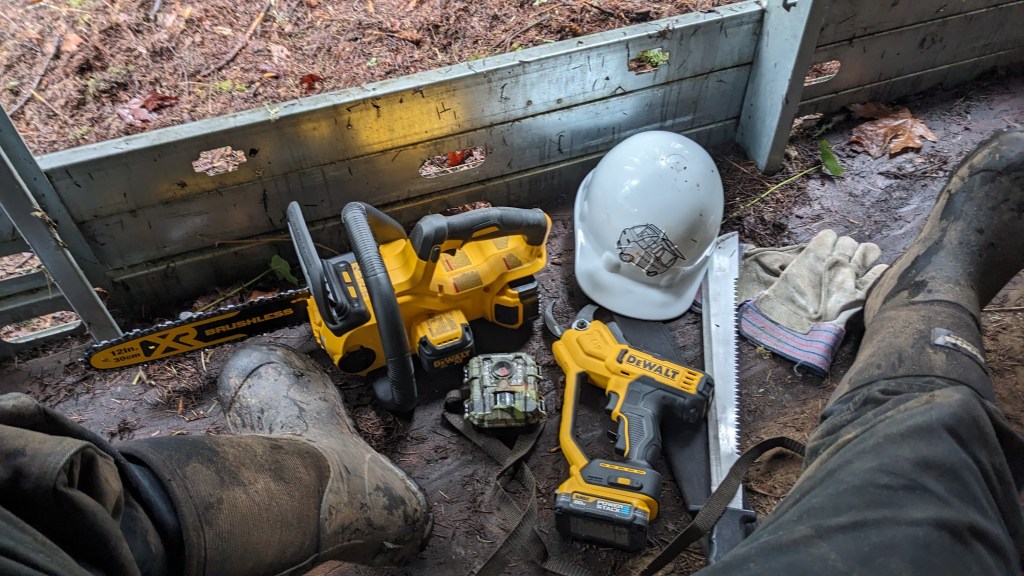
Until today, I’d been getting by with a machete for cutting trails.
It was time to take on the holly with tools more up to the task.
I’ve been trying to keep my inclination to buy new tools in check, making use of my local tool library.
Cutting Trails
The land is overgrown with salmonberry in places, making traversal difficult.
I’m cutting a network of trails through these, along with other places to minimize foliage trample-age.
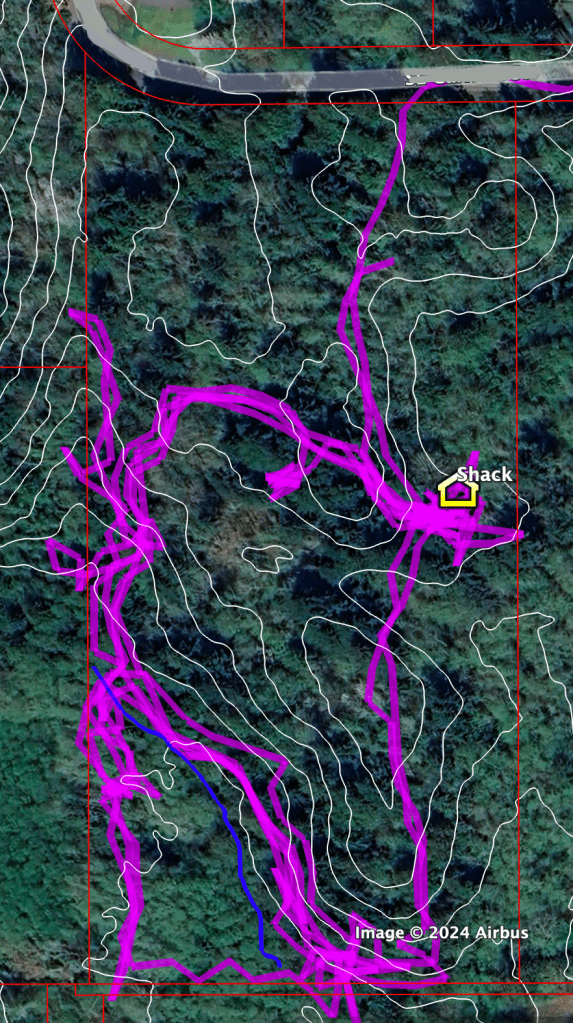
Recorded tracks from today’s trail cutting to the Southwest corner of the lot:
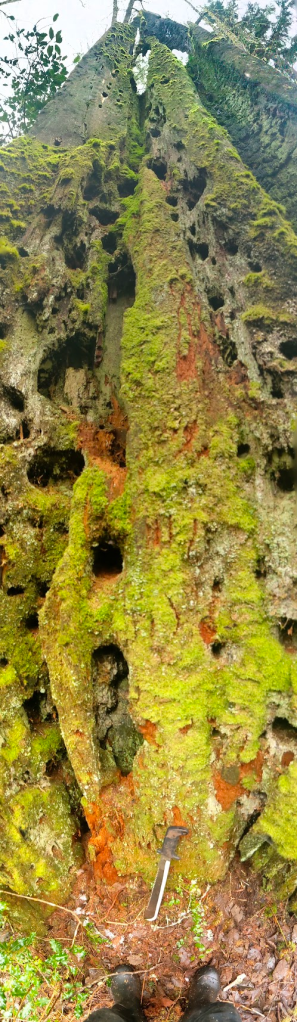
Found, out that way.
Dump Run
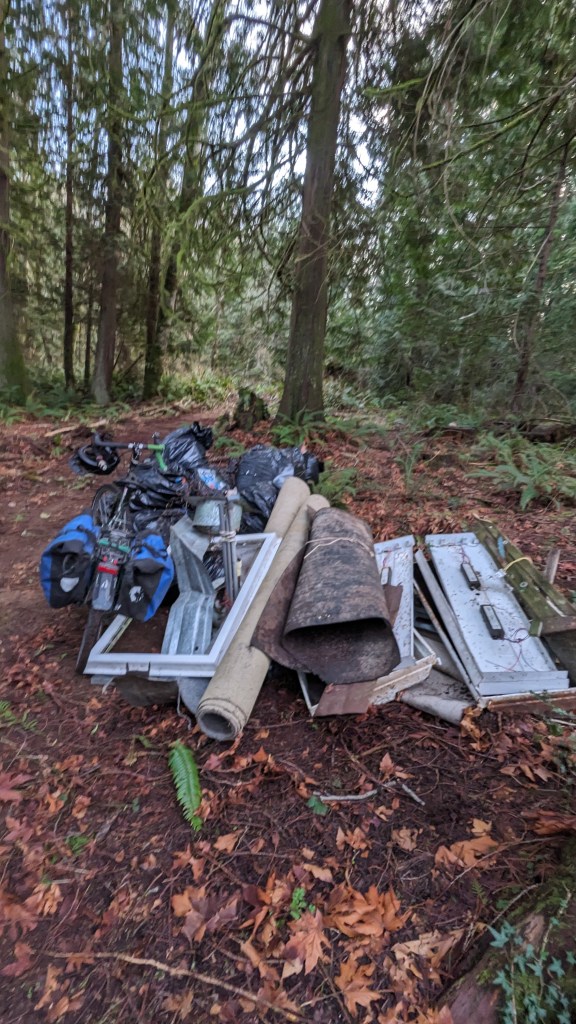
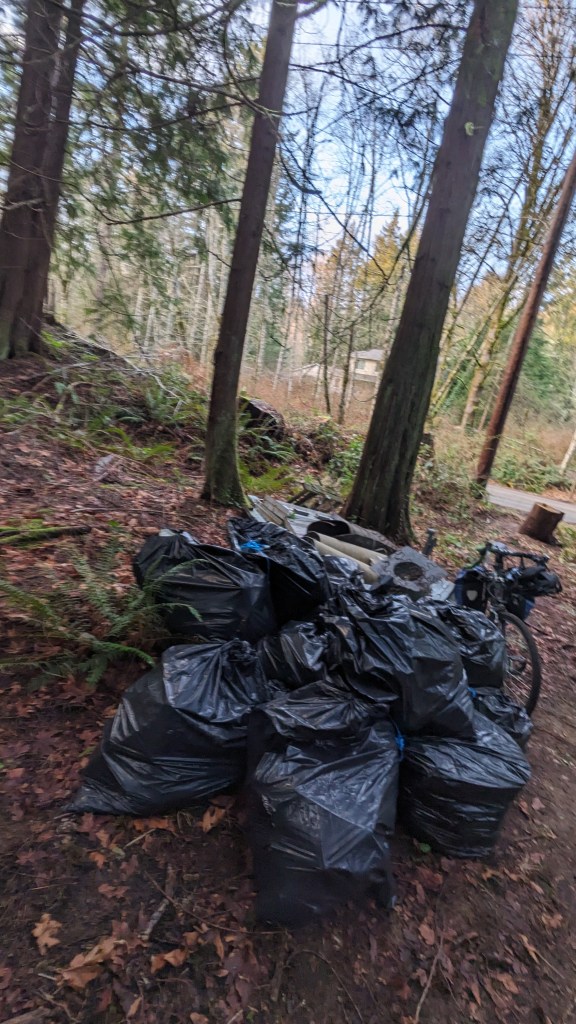
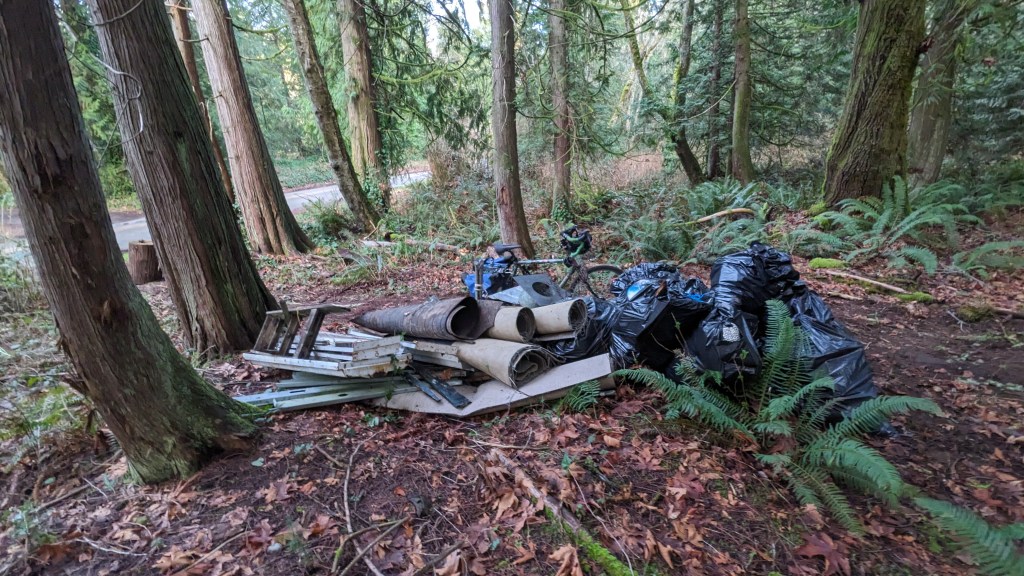
I rented a U-Haul and did a dump run.
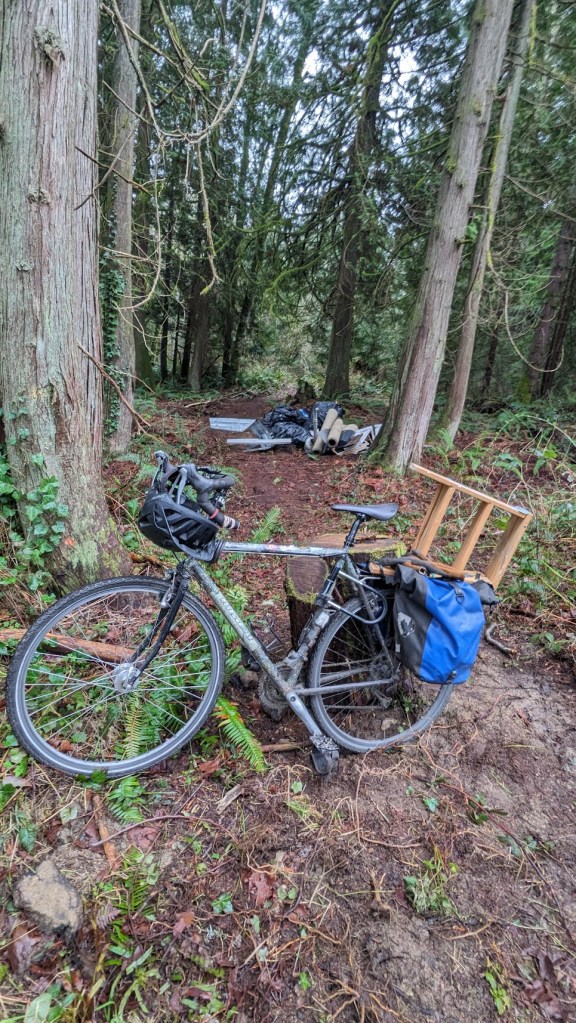
Garbage hauled out of the woods from the shed and overgrown encampments weighed in at 1000 lbs.
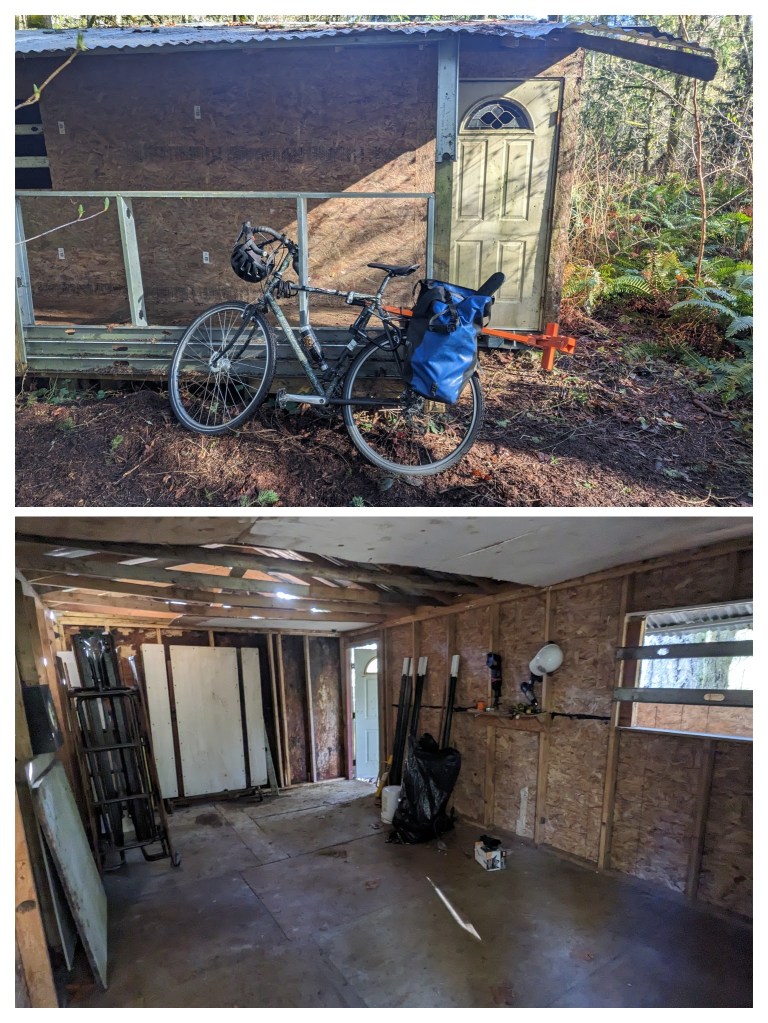
Bike for scale.
The Shed
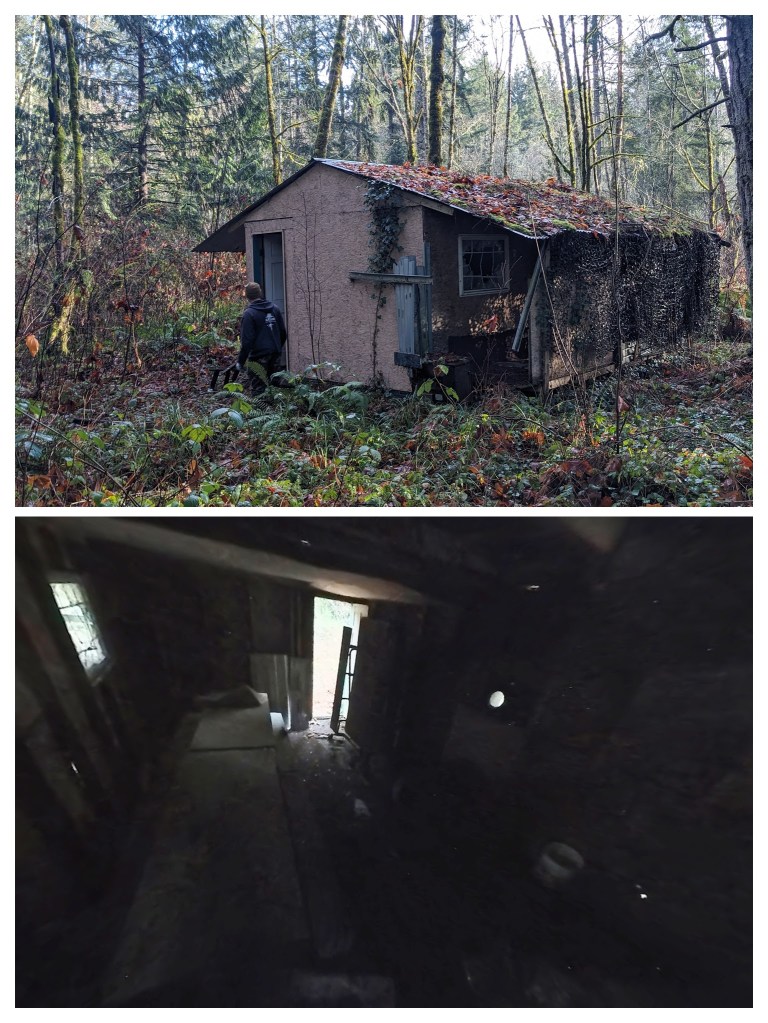
The land is raw and undeveloped, except for a shed.
The shed had a lot of trash and moldy carpet that I hauled out on foot.
This time lapse was taken towards the end of pulling 8 inches of cedar needles, dirt, moss, and trash off the roof.
Getting there
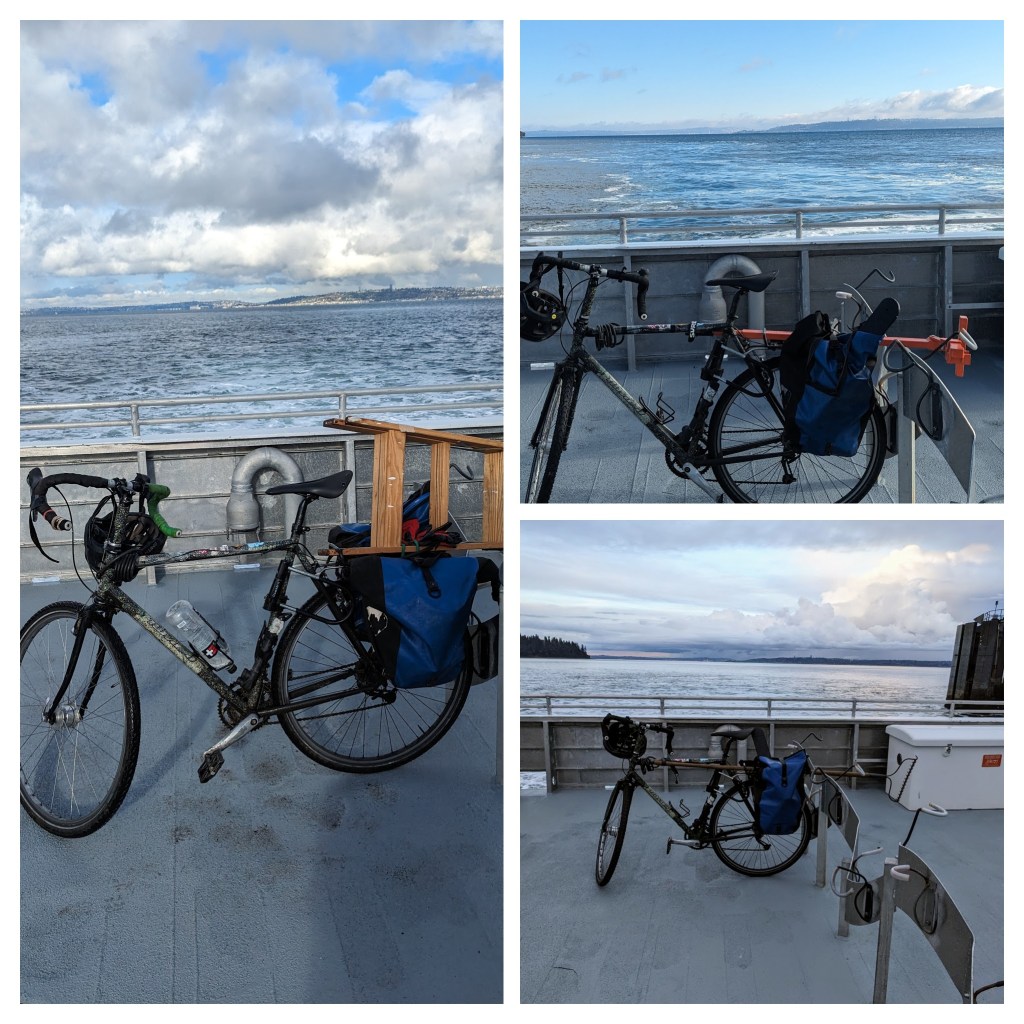
I get there by bike from Capitol Hill to downtown, onto the fast ferry to Southworth, and then about 4 miles to the land.
I get the boat almost to myself. Normal commuters go in the opposite direction.
Most of the bike ride between the ferry terminal and the farm is along the water.
Most of that is along roads seldom traveled by cars.
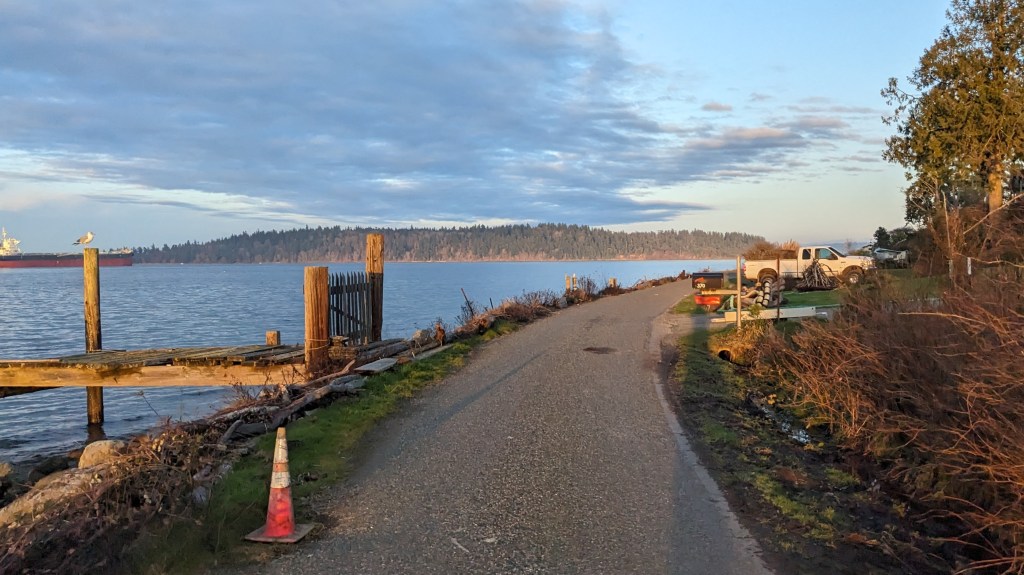
You actually can’t drive there. I mean, you can, but parking is tricky.
Right now, most cars can’t get up onto the land without getting stuck.
Bought It
It’s got salmonberry, huckleberry, himalayan and trailing blackberry, oregon grape, blackcap raspberry, osoberry, and salal.
I imagine someday making a frankenberry out of all of them. Hence Frankenberry Farm.
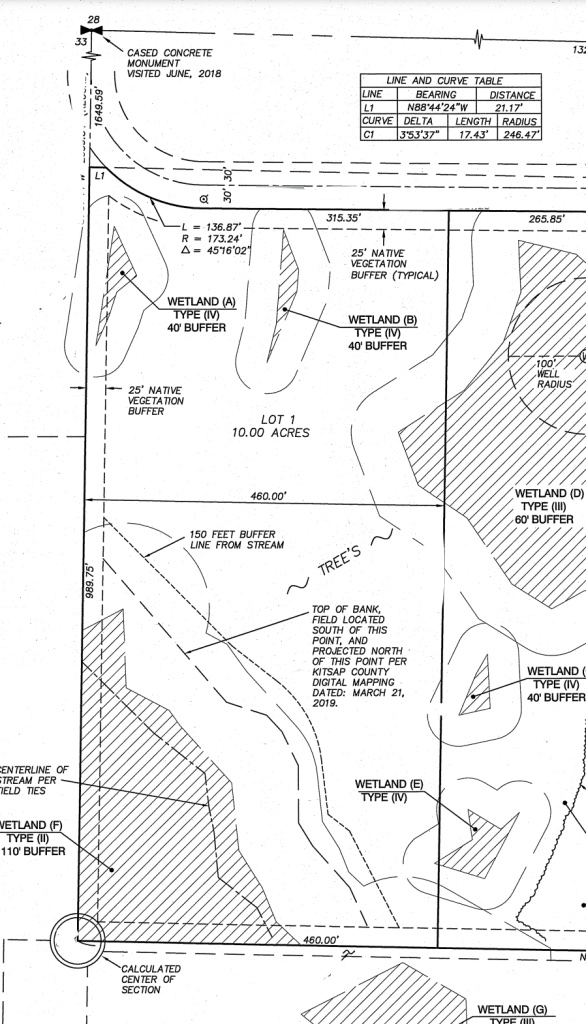
Here’s part of a survey of the plot that came with the title report.
 Frankenberry Farm